

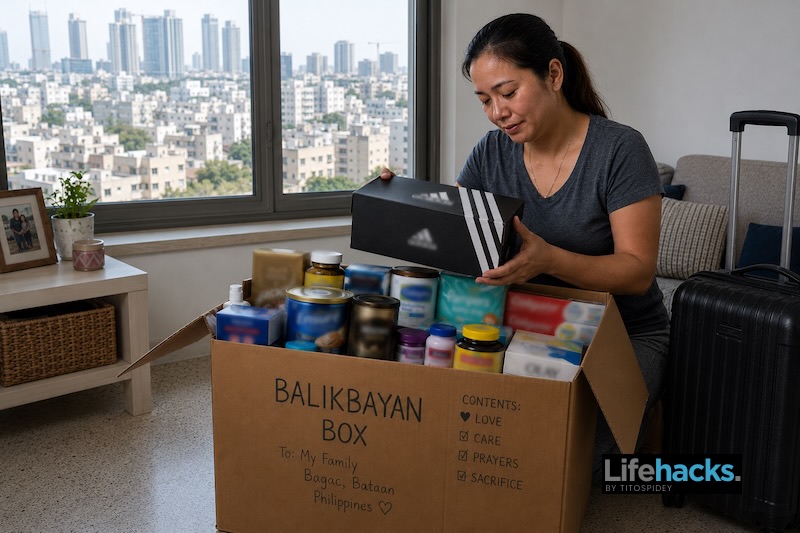
⚠️ Important Note: The characters and names mentioned in this article (Nilda and Raul) are fictional composites created to illustrate the real-world experiences, struggles, and packing strategies of millions of Overseas Filipino Workers (OFWs) worldwide.
You stare at that empty, brown cardboard box sitting in the corner of your room, and suddenly, your vision blurs. Five years since you, Nilda, a 38-year-old OFW, left Bagac, Bataan, you are finally getting ready to send a package home to your family. If you want to make sure every single sacrifice counts, learning how to pack a balikbayan box to maximize space is the greatest gift you can give them. This year, your youngest baby is officially entering Grade 1, your daughter is turning 13, and your husband Raul is still driving his tricycle under the hot sun—every square inch of this box belongs to them.
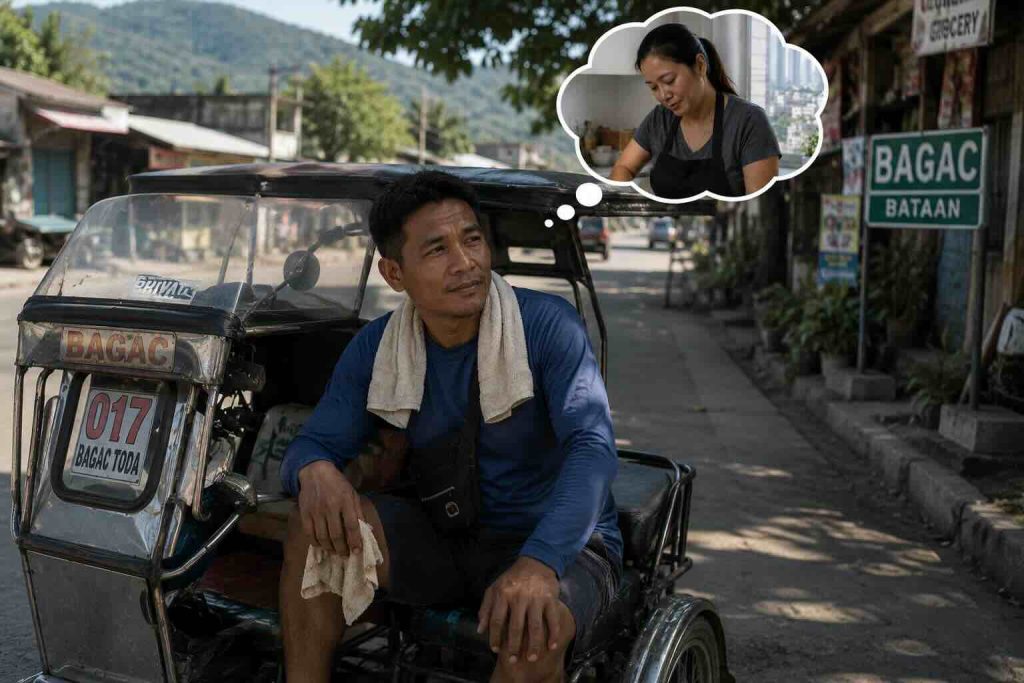
Five years.
Five years since you, Nilda, a 38-year-old OFW, left Bagac, Bataan. Five years of counting down the months in your head. Five years of waking up in a cold, unfamiliar room abroad, swallowing the ache in your chest, and pushing through another grueling shift. You missed the first steps. You missed the choppy, front-toothless first words. You’ve had to settle for a pixelated face on a Messenger video call, singing happy birthday through a screen while wiping your tears so they wouldn’t see you break.
But this year is different. This year, your baby is officially entering Grade 1.
Your little one is putting on a uniform, strapping on a backpack, and walking into a real classroom in Bataan. You might not be the one holding their hand at the school gate, but by God, you will be the one who equips them for battle. Every single item you bought at the end of the month—every box of 24-count Crayola, every sharp little pencil, every single polo shirt—is a physical piece of your heart you are sending home.
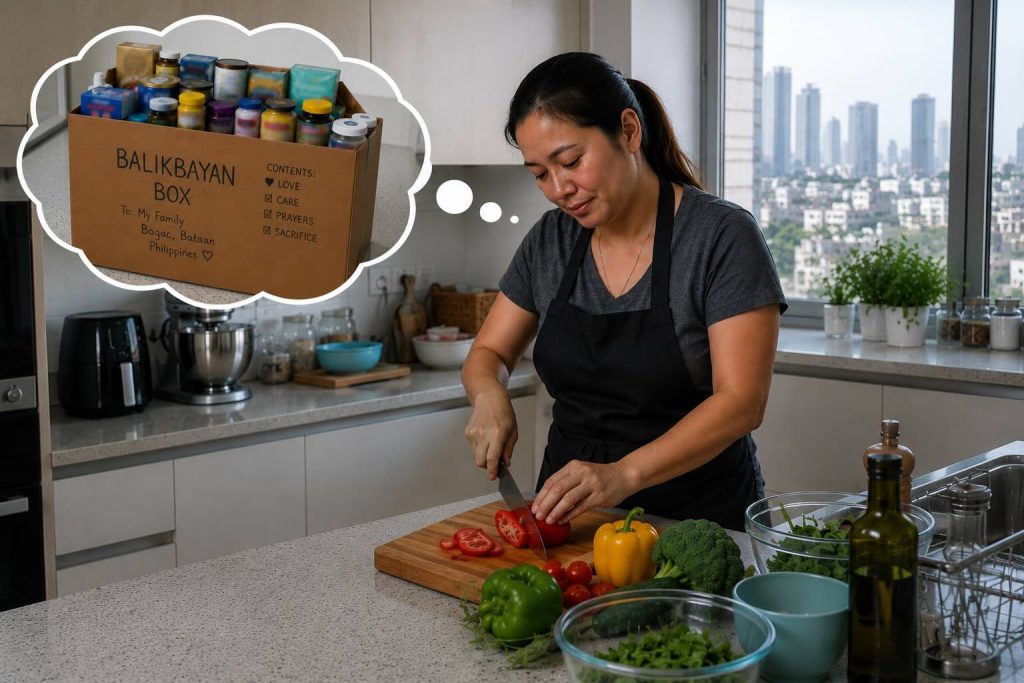
This isn’t just cargo. This is your love, tightly packed and sea-freighted. Because every square inch you waste in this box is a square inch of your sacrifice left behind, let’s make sure we pack this Balikbayan box to its absolute, tightest limit.
Here is how you build your masterpiece.
- Phase 1: The Armor (Protecting Your Sacrifices)
- Phase 2: The Emotional Tetris (Layering Your Love)
- 1. The Heavy Base: The Everyday Relief
- 2. The Heart Layer: The Milestones and Promises
- 3. The Dream Canopy: The Sweet Rewards
- Phase 3: Shipping Logistics—Timing It Perfect for Bataan
- The June/July Class Opening Timeline
- Choosing the Right Courier
- The Secret Magic: Packing the Unseen
- The Final Seal
Phase 1: The Armor (Protecting Your Sacrifices)
Before a single token of your love goes inside, you have to protect it from the rough oceans, the careless port handlers, and the humid warehouses.
- The “H-Taping” Vow: Do not just run one sad strip of tape down the middle. Your sweat paid for these contents. Use heavy-duty packaging tape and seal the bottom center seam, then cross over and seal the left and right edges completely. It should look like a capital H.
- The Plastic Shield: Line the entire inside with a jumbo trash bag or a thick Balikbayan box liner. If another container leaks on the ship, or if rain pours during the door-to-door delivery in Bataan, your baby’s crisp new notebooks will stay bone-dry.
Phase 2: The Emotional Tetris (Layering Your Love)
To squeeze every millimeter of space, you must organize your items into three distinct layers. Think of it as building a house for your family’s smiles.
+-------------------------------------------------------+
|  TOP LAYER: Chips, Marshmallows, Cereal, Ate's Dress  |
+-------------------------------------------------------+
|  MIDDLE LAYER: Husband's Shoes, Toys, Grade 1 Books   |
+-------------------------------------------------------+
|  BOTTOM LAYER: Canned Goods, Spam, Body Wash, Lotion  |
+-------------------------------------------------------+
1. The Heavy Base: The Everyday Relief
The bottom of the box belongs to the heavy weights—the grocery hauls that tell your family, “I’m taking care of your meals, even from here.”
- The No-Gap Rule: Line up your cans of Spam, corned beef, and Vienna sausages tightly against each other like bricks.
- The Spill-Proof Ritual: Take the giant bottles of body wash and lotion. Unscrew the caps, place a layer of plastic cling wrap over the opening, screw the caps back on, and tape them down. You didn’t work overtime just to have Irish Spring ruin your child’s Grade 1 pad paper.
2. The Heart Layer: The Milestones and Promises
This is the middle layer. It’s where the tears usually start to fall as you pack.
- Destroy the Cardboard Shoeboxes: You bought those gorgeous, branded rubber shoes your husband Raul has been eyeing for years to wear during his long shifts driving his tricycle around Bagac. Throw away the shoe box. It takes up massive, useless space. Instead, stuff the inside of Raul’s shoes with his new socks or loose candies to keep the shape, wrap them in a t-shirt, and wedge them tightly between the cans.
- The Ranger Roll Method: Never fold clothes. For Ate’s 13th birthday dresses and your youngest’s Grade 1 uniforms, lay them flat, fold the sleeves, and roll them into tight, solid logs. This compresses fabrics to 50% of their size. Use these clothing logs to fill the small, awkward gaps between your heavy items.
3. The Dream Canopy: The Sweet Rewards
The top layer takes the least amount of pressure, making it the perfect home for the treats that make your family feel like it’s Christmas morning in the middle of the year.
- The Chocolate Strategy: Traveling through international waters gets hot. Place the bags of chocolates right in the center-top, completely insulated and cushioned by soft clothing so they don’t melt into a single giant block.
- Forget Bubble Wrap: Do not waste money or space on plastic bubbles. Use bags of chips, marshmallows, and boxed cereals as your shock absorbers at the very top. They protect the school supplies underneath while filling the final inches of the box.
Related: The Ultimate Guide to the Cheapest Ways to Send Money to the Philippines (OFW Guide)

Phase 3: Shipping Logistics—Timing It Perfect for Bataan
A mother’s love is precise. You don’t want these school supplies arriving in September when classes are already mid-way through.
The June/July Class Opening Timeline
To ensure your child walks into Grade 1 with your gifts in hand:
- When to Call the Forwarder: March to early April.
- The Reality: Standard sea cargo to Central Luzon (Bataan) takes anywhere from 45 to 60 days. Sending it by April guarantees your box sails smoothly, clears the Bureau of Customs without holiday traffic, and arrives at your doorstep in Bagac—giving Raul plenty of time to help label the notebooks.
Choosing the Right Courier
Don’t trust your 5-year milestone to just anyone. Stick to DTI-accredited, high-reliability freight forwarders:
- LBC Express: They are slightly pricier, but their door-to-door tracking to Bataan is bulletproof. You will see exactly when it hits the boat and when Raul signs for it at home.
- Forex Cargo / Atlas Shippers: If you are based in North America, these are the kings of budget-friendly flat rates for Jumbo boxes heading straight to Luzon.
The Secret Magic: Packing the Unseen
Before you close the top flaps, take a moment. Look at what you’ve built. That box is a monument to your resilience.
Here are the tiny, high-impact details that turn an ordinary shipment into a core memory:
- Drop Loose Candies into Every Corner: If you see an air pocket, drop a single piece of hard candy, a pack of crayons, or a bar of soap into it. A perfectly packed box shouldn’t make a single sound when you try to shake it.
- Write Love Notes on the Items: Take a permanent marker and write directly on the plastic wraps. On the Grade 1 pad paper, write: “Galingan mo sa school, anak. Proud si Mama.” On Ate’s dress: “Happy 13th Birthday, ganda mo rito!”
- The Hidden Letter: Write a long, handwritten letter to your family and tape it to the inside of the top flap. Let them read your heart before they even touch the chocolates.
The Final Seal
Sit on the box. Use your weight to push the cardboard flaps down until they meet. Tape it until it looks indestructible. Take your black permanent marker, and write your home address in Bagac, Bataan in big, bold letters on three different sides.
When the cargo handlers come to carry it away, your room will feel suddenly empty. Your arms will feel light. But your heart should be full.
You may be oceans away, working yourself to the bone in a foreign land—but when that box arrives in Bataan, and Raul and the kids open those flaps, your presence will fill that house. You are right there, standing with them, matching them step-for-step as your baby walks into Grade 1.
Pack it tight, Nilda. Your love is coming home.
